
Use Cases & Fishing Conditions
A trap only works if it suits the ground it sits on, the depth it fishes and the animal it is meant to hold. These are the four fisheries our traps run in every week.
Commercial Shrimping
High-volume fleets working long strings of gear, hauling on a winch, all season long. Durability per unit matters more here than anything else.
Commercial boats need traps that survive hundreds of hauling cycles without the frame going soft or the mesh stretching open. We build these with a heavier frame wire and a thicker zinc coating, because the cost of a trap that fails mid-season is far higher than the price difference between gauges.
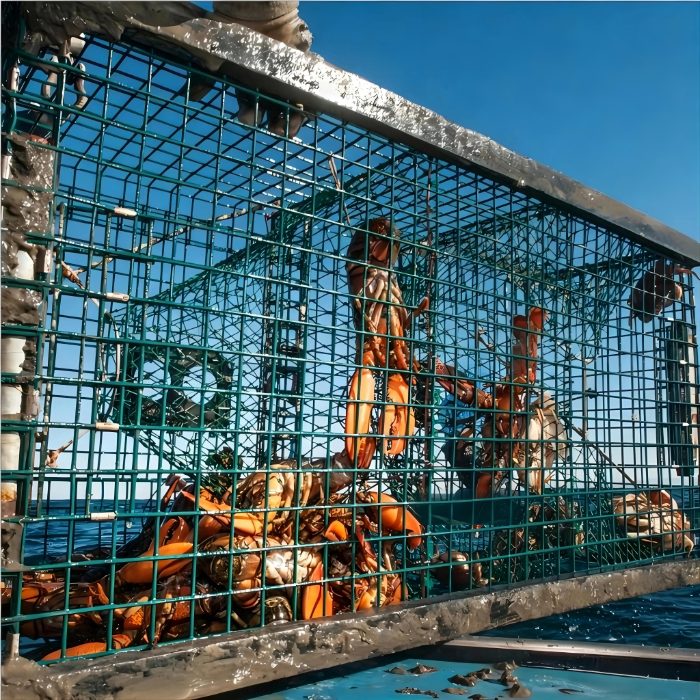
Crab & Lobster Trapping
Bigger animals, harder shells and stronger escape attempts. The same wire mesh principle, built heavier and with a wider throat.
For crustacean fisheries we increase frame wire diameter, add corner bracing and open the funnel throat so larger animals can enter. Because these traps are often fished deeper, the bridle attachment point is reinforced and the base is weighted or ballasted to keep the trap upright under load.
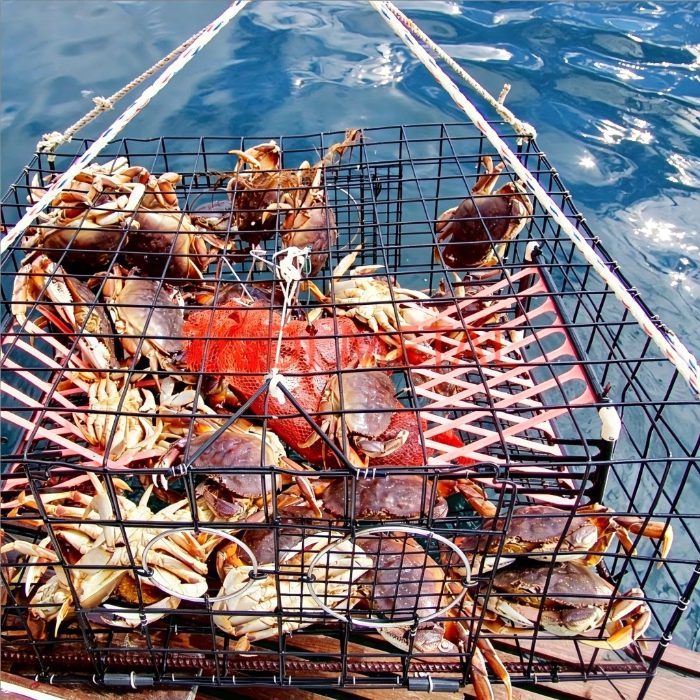
Inland, Lake & Estuary Fishing
Shallow, sheltered water worked from a small boat or by hand. Light traps that are easy to haul and easy to store.
Inland fisheries usually fish fewer traps but handle them far more often, so weight and handling matter as much as strength. A smaller, lighter trap in a fine mesh is the natural fit here: easy to lift by hand, it rolls over weed and soft mud without digging in, and stacks away in a small boat or a shed during the closed season.
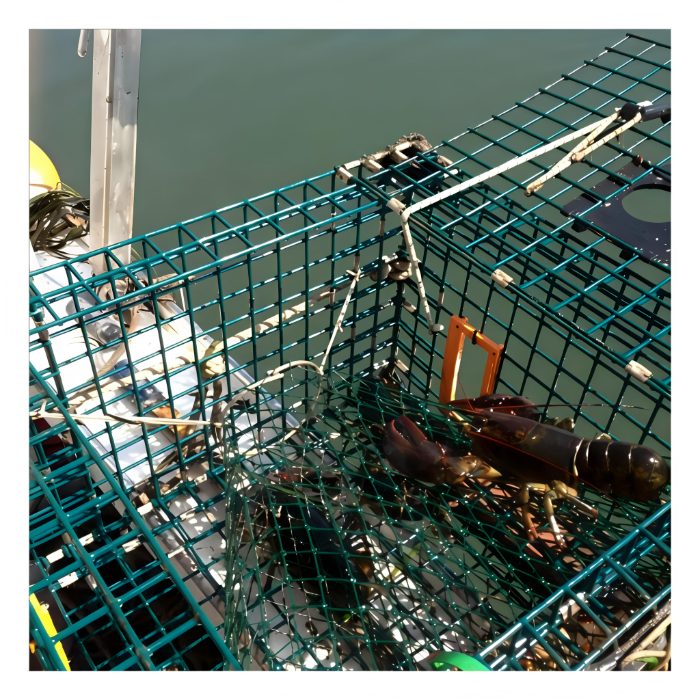
Aquaculture, Sampling & Live Harvest
Ponds, tanks and hatcheries use traps to check stock, grade by size and harvest live animals without netting the whole pond.
Farm operators need gear that is gentle on the stock, easy to disinfect between ponds and repeatable enough that a sample actually represents the pond. Wire mesh traps with a clean galvanized or PVC-coated finish are simple to rinse and dry, and the aperture can be set to select a specific size class.
Getting more out of every trap
Small rigging details decide whether a trap fishes at its best. These are the points we raise with buyers most often.
Set the string for the ground
Space traps so they land clear of each other on rough bottom, and shorten the spacing on flat sand. A bridle that keeps the trap upright is worth more than a heavier frame.
Bait placement
Bait held in a center cage or mesh bag releases scent from inside the trap, which draws animals through the funnel instead of letting them feed from outside the mesh.
Soak time and escape
Long soaks suit larger traps with a controlled throat. If your regulations require escape gaps or a biodegradable panel, tell us and we build it in at the factory.
Not sure which model fits?
Tell us the species, depth and bottom type on WhatsApp and we will recommend a model, mesh size and frame gauge for your conditions.